The Lab Updates
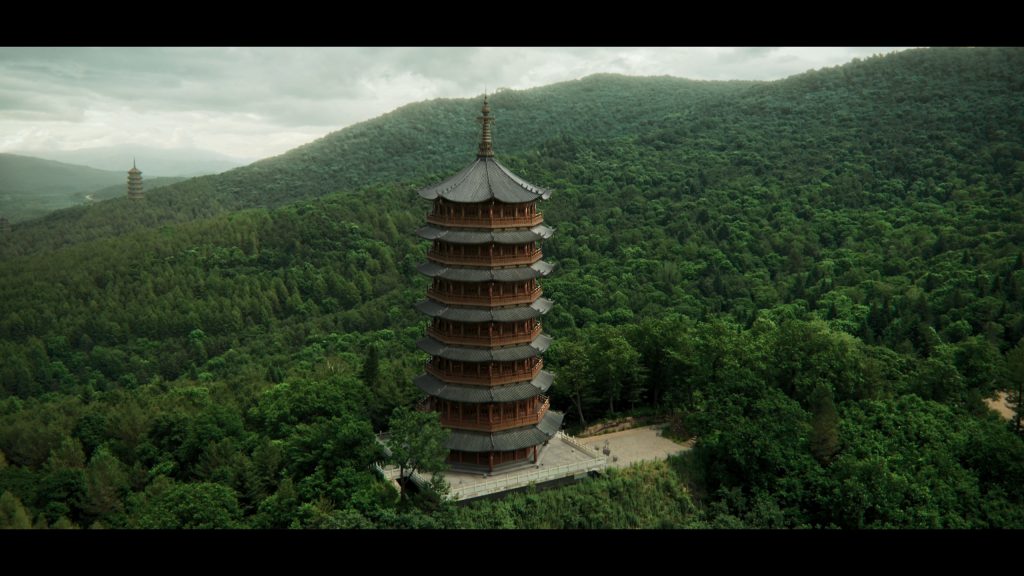
Digital Reconstruction and Cinematic Compositing of a Mountain Temple Tower
This case study demonstrates how, within a mountainous forest environment, we achieved precise alignment between a reconstructed ancient tower asset and the live-action landscape with camera matchmoving. By combining PBR photorealistic texturing with multi-light compositing workflows, we rebuilt the tower’s lighting hierarchy and visual depth, while additional environmental detail work helped seamlessly integrate the CG asset into the natural forest assets, resulting in a realistic cinematic aesthetic. We recreated a high-fidelity ancient tower model with a strong sense of historical authenticity. Using a physically based rendering (PBR) material workflow, we carefully reproduced aged surface characteristics such as weathering, abrasion, and accumulated stains, allowing the structure to convey the passage of time through subtle texture detail. The newly created asset replaced the simplistic structure present in the original footage, significantly improving both the architectural detail and the overall sense of scale within the frame. To achieve more refined lighting control, the tower was rendered and composited using separate lighting passes. Working within an ACES color management pipeline, we independently adjusted key light, ambient light, fill light, and additional lighting layers, ensuring that the tower’s illumination logic matched the surrounding forest environment naturally and consistently. We also introduced targeted environmental storytelling details…
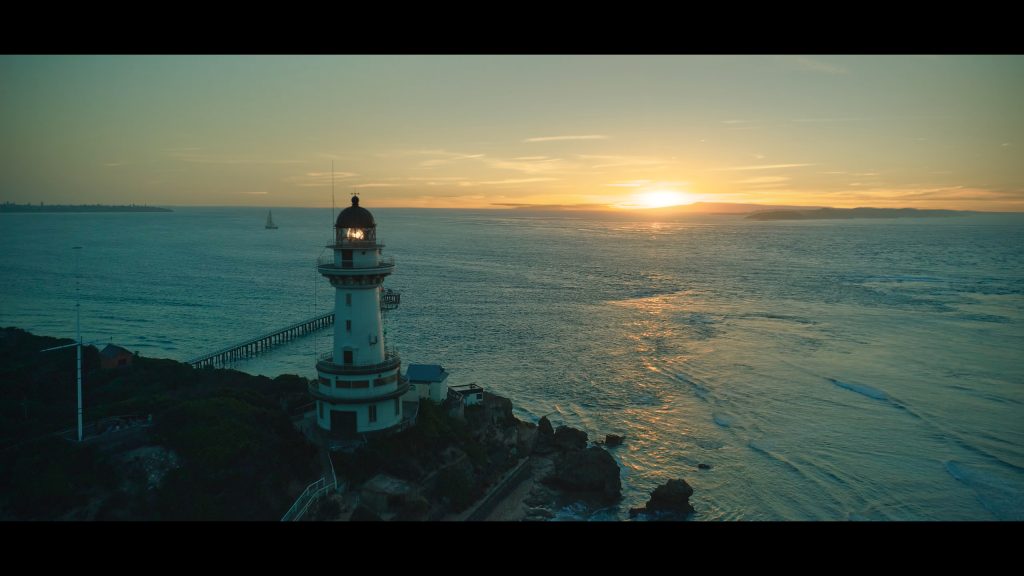
Digital Reconstruction and VFX Compositing of a Lighthouse Scene
This case study demonstrates how a standard aerial video of an ocean lighthouse can be transformed through advanced 3D compositing techniques. Beyond enhancing the overall visual quality, we also replaced the scene’s primary architectural structure and completely reworked the color atmosphere of the final image. Main Production Workflow Lighthouse Asset Reconstruction Due to limitations in the original shooting conditions, the lighthouse in the source footage lacked sufficient visual detail. To address this, we rebuilt the lighthouse from scratch as a high-fidelity digital asset. Using physically based rendering (PBR) materials, we accurately recreated the realistic surface characteristics of the lighthouse. The original lighthouse was fully replaced, while the new asset was seamlessly integrated into the environment with natural lighting and shadow interaction. Camera Tracking and Precise Scene Alignment We performed pixel-level camera tracking on the original footage to reconstruct the exact motion path of the camera. This ensured that the newly created lighthouse remained firmly “anchored” to the ground throughout the shot. Even during camera pans and movement, the connection between the model and the environment stayed perfectly synchronized, with no positional drift or jitter. Dynamic Reflection Reconstruction Based on Live-Action Ocean Footage To achieve more convincing material realism, we reprojected…

Let Every Tree Have Its Own Life
Reconstructing Nature Through Procedural Systems A Geometry Nodes–based parametric vegetation system designed for precise morphological control and real-time response to physically driven wind fields. In this project, we move beyond the traditional boundaries of modeling and animation. Built entirely within Blender Geometry Nodes, and grounded in Cosserat rod–based physical constraints, we developed a fully procedural, dynamically solvable, high-performance tree system capable of generating cohesive and believable natural environments. Procedural Vegetation System From Parameterization to Species Variation Flexible Morphological Control Through an intuitive parameter-driven system, we can precisely control: * species variation * canopy structure * branching hierarchy * curvature behavior * density distribution Subtle parameter adjustments allow for a wide range of plant variations while maintaining full non-destructive control. The system also supports art-directable adjustments at every hierarchical level of the branching structure. All vegetation UVs are generated through a fully procedural UV workflow. Additionally, the internal branching system is built upon a topology-aware curve data structure, providing a stable foundation for downstream physical simulation with believable details. Geometry Nodes–Based Dynamics System Physically Driven Wind Simulation Continuum Mechanics–Based Branch Dynamics Within Geometry Nodes, we developed a line-based solver derived from Cosserat rod theory, enabling physically plausible simulation of branch behavior…
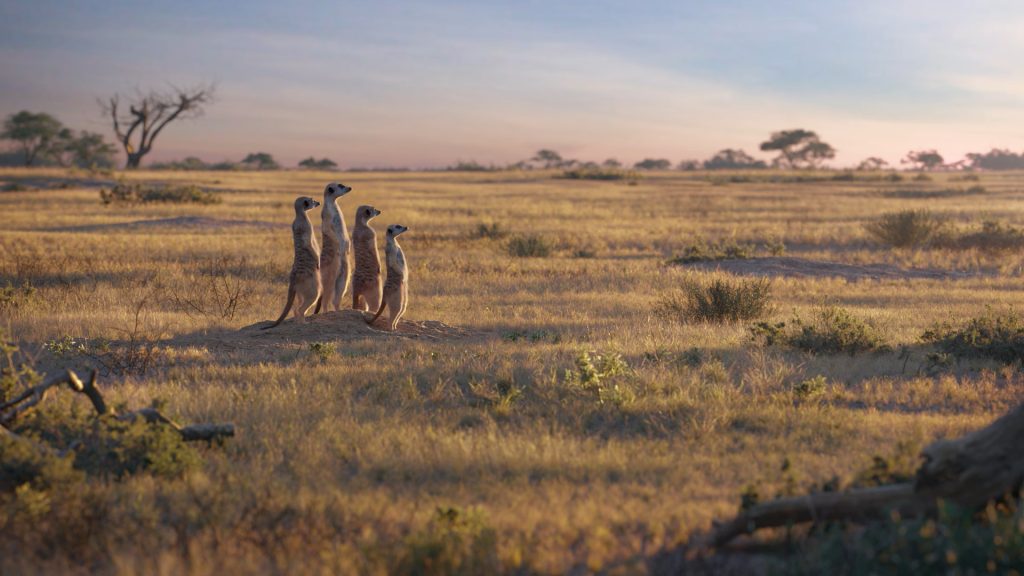
African Savannah
This project follows a film-grade production pipeline, combining manual sculpting, layered displacement, and Geometry Nodes–based micro-terrain generation to construct high-fidelity environmental detail. Vegetation distribution is controlled through a procedural system, while scene optimization strategies—such as camera frustum culling and viewport optimization workflows—ensure stable performance when handling large-scale environments. Rendering is performed in Blender’s Filmic color management pipeline, outputting multi-pass OpenEXR data. Using Cryptomatte and Light Groups, we achieve precise, layered compositing with fine-grained control. The final result captures a believable and grounded moment within a natural wildlife environment. 1. Environment & Layout Foreground Micro-Terrain Development Primary landforms are established through manual sculpting, while layered displacement is used to build multi-scale surface detail. Geometry Nodes are employed to generate fine granular breakup, scattered dry branches and rocks and debris. These elements enhance surface complexity and environmental realism. Procedural Ecosystem Distribution A Geometry Nodes–driven distribution system is used in combination with manual weight painting, allowing for localized control over the vegetation scale, density variation and directional growth patterns. 2. Scene Optimization While pursuing visual fidelity, performance optimization remains a core consideration. By implementing highly efficient instancing workflows within Geometry Nodes, memory usage and render overhead are significantly reduced. Even with thousands of…
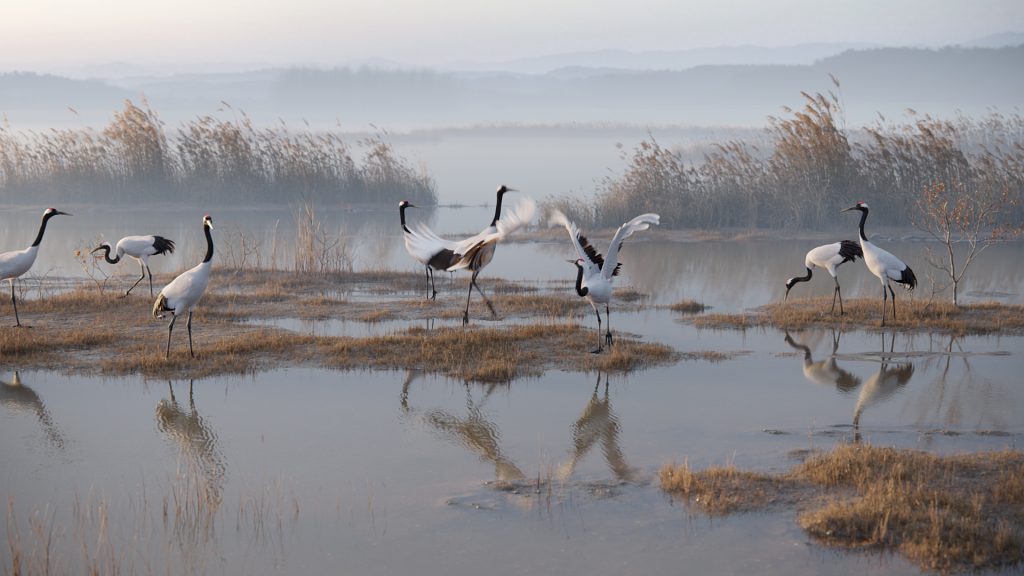
Dynamic Wetland Ecosystem Simulation Technical & Artistic Breakdown
1. Executive Summary This project aims to achieve a highly faithful reconstruction of a natural wetland ecosystem in a digital environment. By leveraging Blender Geometry Nodes to establish the underlying ecological logic, combined with advanced procedural shaders to simulate complex physical phenomena, and finalized through cinematic compositing, the project achieves a cohesive integration of technical accuracy, physical plausibility, and artistic direction. 2. 3D Technical Depth A. Geometry Nodes–Driven Dynamic Ecosystem Instead of relying on static asset placement, we developed a procedurally driven vegetation system grounded in ecological logic. This approach enables: non-repetitive growth variation biologically plausible distribution patterns efficient instancing workflows B. Physically Coherent Water–Land Transition To accurately represent the interaction between water and terrain, we studied the capillary behavior of moisture in porous surfaces. Using Geometry Nodes, water level attributes are extracted to dynamically drive a wetness gradient across terrain materials. A dual-layer approach combining geometry-based masking (node-driven positioning) and material-based shading control, ensures a smooth transition from dry to saturated surfaces. This eliminates hard boundaries at the waterline while reproducing natural albedo shifts in damp soil and increased Fresnel reflectance under wet conditions. 3. Advanced Compositing A comparison between pre-composite and final output demonstrates strong control over the…
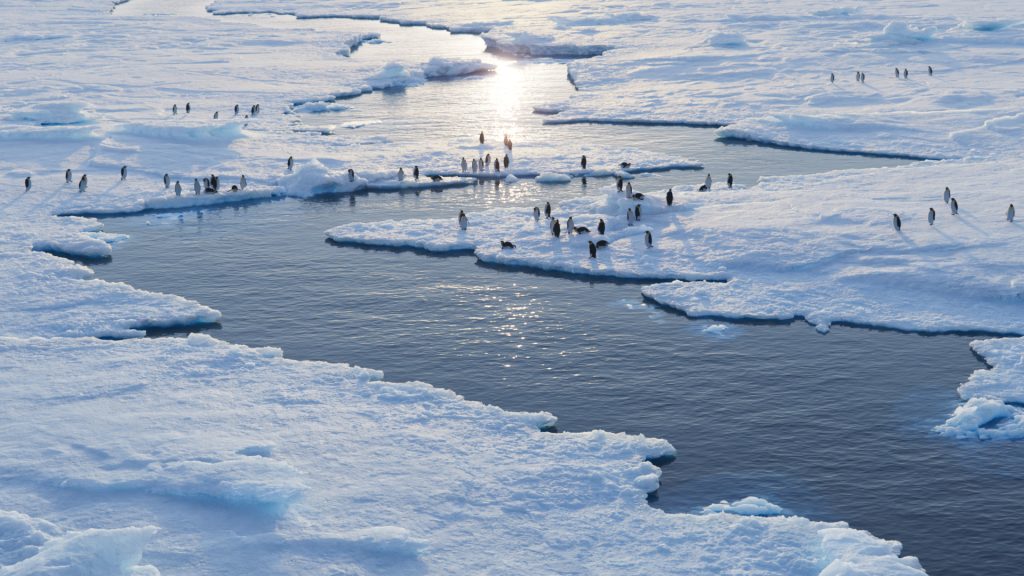
Polar Glacier Environment Creation
The core objective of this project is to demonstrate how Geometry Nodes can be used to optimize the foundational structure of large-scale environments while combining manual fine layout control to achieve a cinematic visual result. 3D Production 1. Core Technology: Mesh-Driven Procedural Terrain The heavy glacier formations seen in the scene are fundamentally generated from an extremely simple low-poly plane. Procedural Detail Generation Using Geometry Nodes, we built a procedural logic system on top of the base plane to automatically generate: * physical ice thickness * side extrusion cracks and crevices * natural melting erosion marks * crystalline surface textures This approach replaces labor-intensive manual sculpting while allowing large-scale assets to retain very low polygon counts with rich visual detail. 2. Materials & Lighting: Physically Based Approach Optical Material Reconstruction For the glacier material, particular attention was given to Subsurface Scattering (SSS) to simulate how light refracts and is absorbed within ice crystals, restoring the characteristic translucent density and softness unique to polar ice. 3. Artistic Control: Manual Layout & Composition To ensure correct visual storytelling, several scene elements were manually art-directed. "The positioning of the penguins and the density distribution of floating ice on the water surface were…