Digital Reconstruction and VFX Compositing of a Lighthouse Scene
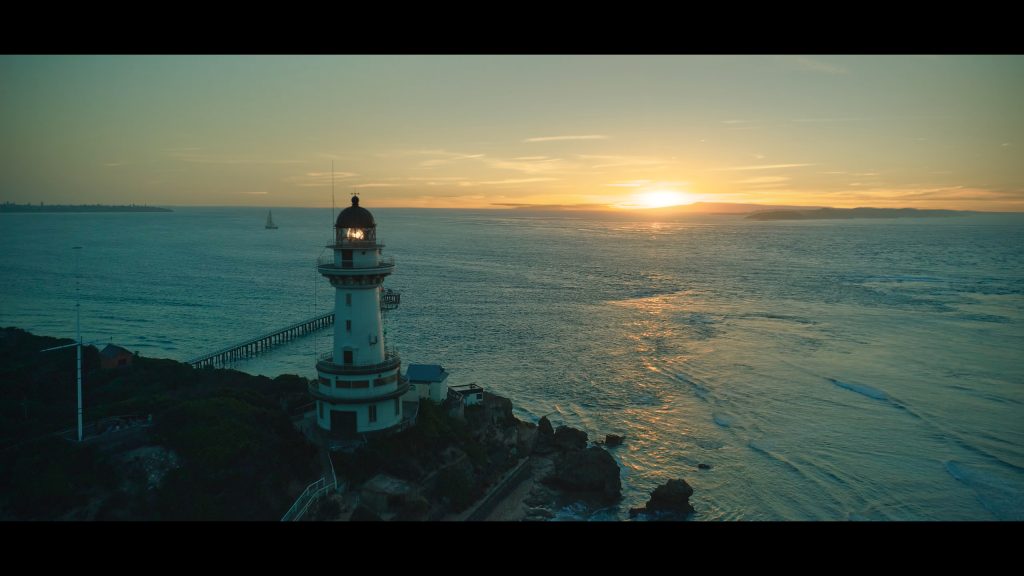
This case study demonstrates how a standard aerial video of an ocean lighthouse can be transformed through advanced 3D compositing techniques. Beyond enhancing the overall visual quality, we also replaced the scene’s primary architectural structure and completely reworked the color atmosphere of the final image.
Main Production Workflow
Lighthouse Asset Reconstruction
Due to limitations in the original shooting conditions, the lighthouse in the source footage lacked sufficient visual detail. To address this, we rebuilt the lighthouse from scratch as a high-fidelity digital asset. Using physically based rendering (PBR) materials, we accurately recreated the realistic surface characteristics of the lighthouse. The original lighthouse was fully replaced, while the new asset was seamlessly integrated into the environment with natural lighting and shadow interaction.
Camera Tracking and Precise Scene Alignment
We performed pixel-level camera tracking on the original footage to reconstruct the exact motion path of the camera. This ensured that the newly created lighthouse remained firmly “anchored” to the ground throughout the shot. Even during camera pans and movement, the connection between the model and the environment stayed perfectly synchronized, with no positional drift or jitter.
Dynamic Reflection Reconstruction Based on Live-Action Ocean Footage
To achieve more convincing material realism, we reprojected the moving ocean surface from the original footage back into the 3D environment. As a result, the reflections visible on the lighthouse glass dynamically display real rolling waves rather than static texture maps, allowing the digital asset to maintain optical consistency with the live-action environment.
Scene Composition and Additional Dynamic Elements
To enrich the composition and enhance spatial depth, we added a distant sailboat to the ocean surface and animated it to move naturally with the waves. This helped fill negative space. In addition, we replaced the overexposed sky from the original footage with a higher-detail sky environment.
Full-Pipeline Color Grading and Look Development
The project utilized the ACES industry-standard color management workflow. During the compositing stage, we enhanced the lighthouse beacon, introduced subtle vignette effects, and rebuilt the overall teal-and-orange cinematic color palette. These adjustments transformed the originally flat aerial footage into a more narrative-driven cinematic image while maintaining visual consistency across the entire piece.
Detail-Oriented Enhancements
We also paid close attention to subtle dynamic elements that are often overlooked. For example, the lighthouse beacon was not only animated with rotational movement, but also paired with corresponding volumetric lighting effects. The weather vane at the top of the tower was rigged and animated to sway and rotate naturally under simulated wind influence.
Likewise, the distant sailboat was not treated as a static prop; it was animated with motion driven by the movement of the ocean surface. Although these details are not immediately obvious in wide shots, they effectively eliminate the “frozen appearance commonly associated with CG assets.
By carefully matching these small yet important physical behaviors, we ensured that once the scene is in motion, the virtual elements genuinely blend into the live-action footage and can withstand close visual scrutiny.